When I first created OnlySoftball, the goal was simple: share real, practical insight to help athletes and families navigate development and recruiting.
This project started the same way many things do—with a question:
What does it actually take to prepare a middle school athlete for high school softball and begin building a foundation for the recruiting process?
Instead of guessing, we decided to document it.
The Athlete
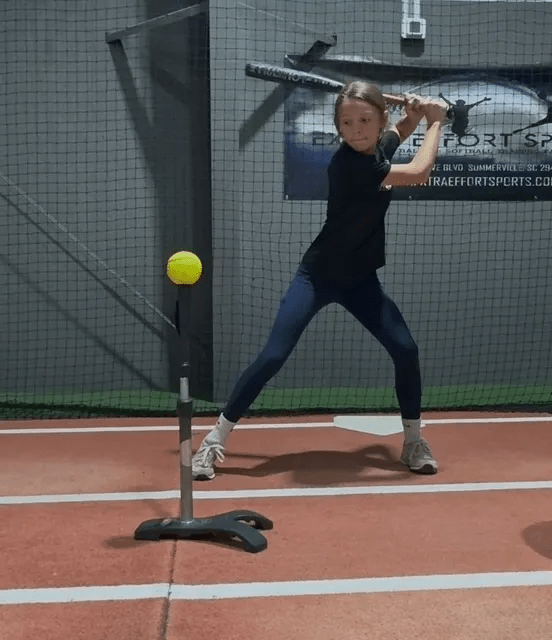
This project followed my daughter, a 2029 athlete preparing for her transition into high school softball. She had a solid foundation, but needed to improve consistency, power, and confidence at the plate.
She committed to the process—and the results speak for themselves:
- Made varsity as a freshman
- Earned a starting role
- Now hitting in the 2-spot
Why We Started This
Too often, players enter tryouts hoping they’re ready instead of knowing they’re ready.
We wanted a plan.
Not just more swings—but intentional work focused on:
- Mechanics
- Strength and power
- Measurable progress
The Evaluation
Before starting any training, we focused on getting clear, honest feedback.
We worked with:
- A Division I Director of Player Development
- A professional player development coach with a minor league background
The feedback was consistent and specific.
Key takeaway:
Her swing path was strong—but her weight transfer was limiting her power.
She was drifting forward instead of staying balanced and working behind the ball.
That became our primary focus.
Building a Plan
Knowing that hitting often determines who gets on the field, we made it the priority of her offseason work.
The early phase focused on:
- Reinforcing mechanics
- Improving barrel control
- Building foundational strength
- Supporting performance through better nutrition
We also incorporated defensive work and overall athletic development to support her growth as a complete player.
Establishing a Baseline
Before making adjustments, we needed a starting point.
Exit Velocity Testing
Using a PocketRadar, we captured baseline exit velocity data. This gave us something measurable to track as she improved.
Strength & Conditioning Focus
We emphasized movements that translate directly to hitting power:
- Lateral bounds → balance and rotational control
- Broad jumps → explosiveness
- Core work → stability and force transfer
Hitting Development
Our work in the cage focused on:
- Staying behind the ball
- Improving load and launch position
- Creating consistent contact points
- Generating backspin for better ball flight
We incorporated drills such as:
- Timing variations to prevent drifting forward
- The “Clock Drill” to improve barrel control and precision
What Actually Mattered
This wasn’t about doing more—it was about doing the right things with intention.
The biggest improvements came from:
- Fixing small mechanical inefficiencies
- Training with purpose, not just repetition
- Tracking progress instead of guessing
- Combining skill work with strength development
The Result
By the end of the offseason, the difference was clear.
She didn’t walk into tryouts hoping to make the team—
she walked in prepared to compete.
That preparation led to:
- A varsity roster spot as a freshman
- A starting role
- Immediate impact in the lineup
What This Means for Other Players
You don’t need a perfect plan—but you do need a clear and intentional one.
Most athletes:
- Take a lot of swings
- Play a lot of games
But don’t always:
- Address weaknesses
- Train with structure
- Track progress
That’s where real development happens.
Final Thought
If you’re a parent or athlete wondering what to focus on next:
Start with a plan.
Train with intention.
Track your progress.
Because showing up ready changes everything.
If you want help building a clear, personalized plan based on your athlete’s goals and current level, you can book a recruiting and development assessment through OnlySoftball.
 OnlySoftball.com
Leave a comment